Is a pre-sales team worth it for your real estate sales team?
By Jayesh G, Founder · 8 min read. Published 31 October 2026.
In short
- A pre-sales person calls new leads, asks a few questions and fixes site visits, so your closing managers spend their day on visits.
- It pays when your closing managers can't call new leads within the hour because they're on site. One or two extra visits a month can cover the salary.
- Judge pre-sales on visits that happen, not calls made, and on a clean handover to the closing manager.
On this page
- Pre-sales calls first, closing managers close
- One or two extra visits can cover a salary
- Judge them on visits done, not calls made
- A first-call script for a portal lead
- The handover is where pre-sales fails
- Which team are you?
- “A telecaller can’t sell a ₹1 crore flat”
- How Mr. Site Visit helps pre-sales
- Questions teams ask
Look at the printed lead list on your closing manager’s desk. Half the rows are unticked, because they were on site all day. Whose job was it to call them?
That list is the reason pre-sales exists. Someone has to call new leads while your best people are showing flats. A pre-sales person calls every new lead quickly, asks a few questions and fixes the site visit. Your closing managers then spend the day where bookings happen: on the visit. Weighing an AI first call instead? Our post on what AI calling really costs compares it with a telecaller on the same dials.
It’s worth it when your closing managers can’t call new leads within the hour, and the sum below works for your firm. Run it with your own numbers. Judge them on visits that happen, not on calls made.
The simple rule Pre-sales fixes visits; closing managers close. Judge pre-sales on visits that happen.
Pre-sales calls first, closing managers close
Pre-sales is the person or team who makes the first call to every new lead and fixes the site visit. They don’t sell the flat. They get the buyer to the site, ready.
Here’s the path a lead takes:
What about a lead that arrives at 11 pm? Fix a rule, say anything after 9 pm is called by 10 am, so night leads don’t make pre-sales look late.
Why does the hour matter? A Harvard study from 2011 looked at web leads at US companies. Leads contacted within an hour were nearly seven times as likely to qualify as those contacted an hour later. Qualify means reaching a real talk with the person who decides. It’s old and American. But anyone who’s called a 99acres lead the next morning knows the feeling.
One or two extra visits can cover a salary
A pre-sales person pays for themselves when they add enough site visits. So work out what one visit is worth to your firm.
- What a site visit is worth
- Your brokerage (or margin) on one booking × the share of visits that book.
Here’s an illustrative firm. The figures are examples, not market rates:
| Example | |
|---|---|
| What your firm keeps on one booking, after incentives | ₹2,00,000 |
| Visits that book | 1 in 10 |
| One site visit is worth | ₹20,000 |
| Pre-sales salary, a month | ₹25,000 |
| Extra visits a month to cover it | About 1.25 |
Salary isn’t the whole cost: add the seat, the SIM and any incentive on visits done. And that’s the break-even on paper. Two things can break it. Visits a pre-sales person fixes may book less than the ones your closing managers fix themselves. And you can’t always tell which visits were extra. So run it for two months, and compare visits done per 100 new leads before and after.
If your closing managers are on site every weekend, count the new leads nobody called. That number tells you if two visits is a low bar. Our booking calculator shows how many visits your target needs, and cost per booking works out your own numbers.
Who shouldn’t hire one? A team of three to five with a few leads a day. Rotate a lead-duty person each day instead: one person stays off site and calls every new lead.
Judge them on visits done, not calls made
Call counts are easy to fill. A hundred dials of two seconds each look busy and fix nothing. So judge pre-sales on these numbers. Look at the first three every day, and at visits done out of those fixed once a week:
| Daily number | What it shows |
|---|---|
| New leads called within the hour | Speed, the job’s first duty |
| Real talks (2 minutes or more) | Whether calls reach people |
| Visits fixed | The job’s output |
| Visits done, out of those fixed | Whether the visits were real |
| Handover notes sent | Whether the closer can pick up |
The fourth number matters most. Ten visits fixed and three done can mean the buyer only said yes to end the call. That’s the fear with any telecaller: padded visits. So pay and judge on visits done, not visits fixed. Our post on site visit no-shows covers the day-before call that keeps them.
And give them a fair load. How many new leads can one person call properly in a day? Our post on leads per salesperson shows how to work it out.
A first-call script for a portal lead
The first call has one goal: a site visit, at a time the buyer picks. Keep it short and speak the buyer’s language. Here’s a script to adapt:
Then ask four questions, one at a time:
- Budget "What budget are you looking at, roughly?"
- Timing "When are you hoping to move, or book?"
- Who decides "Who else will want to see the flat with you?"
- Location and loan "Which area suits you, and will you need a home loan?"
Two time choices work better than “when are you free?” The buyer picks one instead of saying “I’ll let you know.” And if they’re busy, fix a callback time before you hang up. A lead that says “call later” with no time fixed is easy to lose.
The handover is where pre-sales fails
A visit fixed with no notes means the closing manager starts from zero. The buyer repeats everything, and the site visit feels like a first call.
So nothing goes to a closing manager without these:
- Budget, and whether a home loan is needed
- Who decides, and who's coming to the visit
- What they liked online, and what worried them
- The visit time, and whether they need a pickup
- If a channel partner brought them, the registration acknowledgement
The last point protects your firm and the partner. Our registration format shows what to send before the visit.
Which team are you?
The idea is the same. How you staff it changes with your size:
| If you are… | Then… |
|---|---|
| 3 to 5 people, a few leads a day | No hire yet. Rotate a lead-duty person who stays off site each day. |
| 6 to 15 people, leads waiting at weekends | Hire one pre-sales person first. Add another only when new leads wait past the hour. |
| A developer's sales team | A pre-sales team per project or per source, with its own daily numbers |
| A mandate company with outside partners | Pre-sales calls your direct leads; partner-brought buyers go straight to visit slots |
In Maharashtra, check whether your pre-sales staff need the agent competency certificate from MahaRERA (the state’s real-estate regulator). Our post on MahaRERA certificates for staff explains who needs one.
“A telecaller can’t sell a ₹1 crore flat”
True. And they shouldn’t try. My honest answer to that owner: you’re right, so don’t ask the telecaller to sell. Ask them to get the right buyer to the site at a time they’ll keep.
The worry behind it is real, though. A rushed caller who promises things to get a visit hurts the closing manager later. So give pre-sales the facts sheet for each project, with its RERA registration number. Call only about registered projects: the RERA Act bars marketing a project before registration (Section 3). And one more rule: nothing about price or offers gets promised on the phone. Price is the closing manager’s conversation.
How Mr. Site Visit helps pre-sales
We built Mr. Site Visit for real estate sales teams of three or more. It suits the pre-sales split well.
Leads from 99acres, MagicBricks, Housing.com, Meta forms and your website are assigned the moment they arrive. So they can go to pre-sales first. If nobody calls in time, the lead moves to the next person. It’s two hours by default, and you can change it, so set it to the hour you hold pre-sales to. On Android, calls are matched from the phone’s call log and marked Verified. iPhone calls aren’t logged.
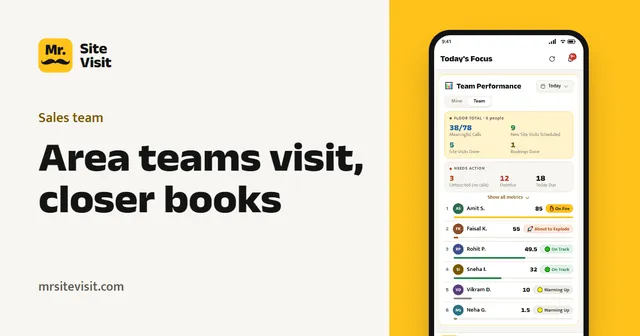
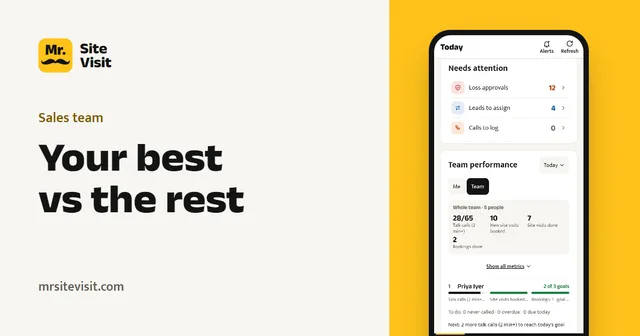
Follow-ups come as reminders, with an 8:30 am push and overdue ones in red. They’re reminders; nothing forces the call. Visits scheduled and done show per person, so you can read each person’s visits done against visits scheduled on the screen, and not ask for it on Monday.
Starter is ₹423 and Growth ₹548 a user a month, billed yearly, from three users, with no GST on top. See how it works for developers, or the plans and prices.
This week, check last Saturday’s new leads. How many were called within the hour? Start there before you hire anyone.
Questions teams ask
What does a pre-sales team do in real estate?
Pre-sales calls every new lead, usually within the hour, asks a few questions about budget, location, timing and who decides, and fixes a site visit. It then hands the buyer to a closing manager with notes, and confirms the visit the day before. Closing managers spend their day on visits instead of first calls.
When should a real estate team hire a pre-sales person?
When your closing managers can’t call new leads within an hour because they’re on site, especially on weekends. If the team is small and leads are few, rotate a lead-duty person each day instead of hiring.
How do you measure a pre-sales executive’s performance?
On visits that happen, not calls made. Track leads called within the hour, real talks of 2 minutes or more, visits fixed, and visits done out of those fixed. Then check the handover notes the closing manager received.
What should a pre-sales script for a portal lead include?
Who you are and which project the buyer asked about, two or three questions about budget, location and timing, then a site visit offered as two time choices. If they’re busy, fix a callback time. Follow up on WhatsApp with the location.
Sources
- SmartCompany, Are you letting online leads go cold? (1 July 2011): 1.25 million leads at 42 US companies; leads contacted within an hour nearly seven times as likely to qualify as those contacted an hour later
- Oldroyd, McElheran and Elkington, The Short Life of Online Sales Leads, Harvard Business Review, March 2011 (the study's page; paywalled, figures as reported by SmartCompany)