EOI in real estate: how a CP firm runs a launch, from EOI to booking
By Jayesh G, Founder · 8 min read. Published 7 November 2026.
In short
- An EOI (expression of interest) is a buyer’s place in the queue for a new launch, usually with a refundable token cheque. It isn’t a booking or an allotment.
- Collect one only for a project with a RERA registration number and written refund terms. The RERA Act bars agents from helping sell in an unregistered project.
- Tag every buyer with the developer before the EOI, keep the cheque in the developer’s name, and plan launch day by role, not by who shouts loudest.
On this page
- An EOI holds a turn, not a flat
- Is the EOI refundable?
- The rule that protects your firm
- The week before launch: your EOI checklist
- Launch day: who does what
- After launch: refunds and the buyers who missed out
- Which team are you?
- “Everyone collects EOIs before registration”
- Where software helps
- Questions teams ask
“Sir, if I don’t get a flat, do I get my EOI money back?” Your salesperson will hear it on launch calls. Can they answer it in one line, with the developer’s terms in hand?
For a CP (channel partner) firm, the EOI decides the launch. Collect it badly, and another firm gets credit for your buyer. Or the buyer loses money and blames you. Collect it well, and launch day becomes a queue you’ve already organised.
Collect an EOI only for a project registered under RERA (the Real Estate (Regulation and Development) Act, the law for new projects). Get the refund terms in writing, and tag the buyer before the cheque moves. Then run launch day by role. Below is the checklist and the rule that protects your firm. Then comes who does what on the day.
The simple rule No RERA number, no cheque. Every EOI gets the developer’s refund terms in writing and your firm’s tag on the same day.
An EOI holds a turn, not a flat
An EOI is a buyer’s place in the queue for a launch. It isn’t a booking, and it isn’t a unit.
- EOI (expression of interest)
- A buyer’s written request for a place in the queue for a new launch, usually with a token cheque. The developer uses EOIs to decide who chooses a unit first, and refunds the token on its own terms if no unit is booked.
Buyers mix these up all the time. They think the EOI holds a flat. It holds a turn. Say that on the first call, and the refund question gets easier later.
Is the EOI refundable?
Usually, but only on the developer’s written terms. There’s no single rule you can promise a buyer.
So ask the developer’s CP desk three things first. Get each answer in writing, on the form or by email:
- Refund condition: is it refunded if no unit is booked, or only if no unit was offered?
- Refund time: how many days after launch day?
- Refund method: back to the same account, by bank transfer, or by a returned cheque?
What if the desk won’t write it down? Tell your buyer plainly. Many firms skip this. It’s the talk you’ll want on record when a refund runs late.
The rule that protects your firm
The RERA Act bars agents from selling in an unregistered project. That includes your firm, whatever the developer says.
The Act is clear. A developer may not advertise, market, book or sell a project before registration (Section 3). An agent shall not facilitate a sale in an unregistered project (Section 10).
A developer also can’t take over 10% of a unit’s price as an advance. That limit holds until a written agreement for sale is signed and registered (Section 13).
EOIs aren’t named in the Act. But one chartered accountant sees a problem. On TaxGuru, the writer argues that EOIs taken before registration go against Section 3. My honest advice: don’t be the firm that tests it.
| If the project… | Then your firm… |
|---|---|
| Has a RERA registration number and written refund terms | Collects EOIs, with the buyer tagged first |
| Has a registration number, but no written refund terms | Asks again, and tells buyers the terms aren’t written |
| Has no registration number yet | Takes no cheques; asks the developer and your lawyer before anything else |
| Asks for the cheque in your firm’s name | Refuses; the cheque goes to the developer’s account only |
You can check the number yourself on your state’s RERA website. In Maharashtra, that’s MahaRERA, the state’s regulator and its register.
The week before launch: your EOI checklist
The week before launch decides whose buyer it is. Do these for every EOI, the same day.
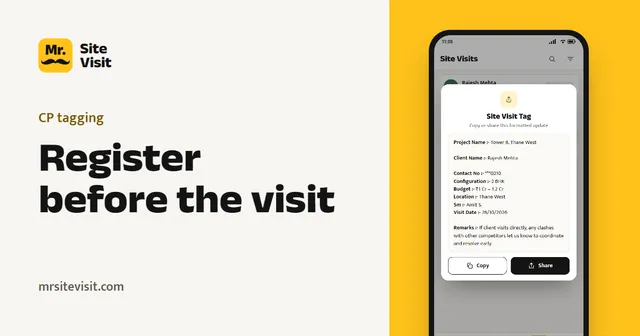
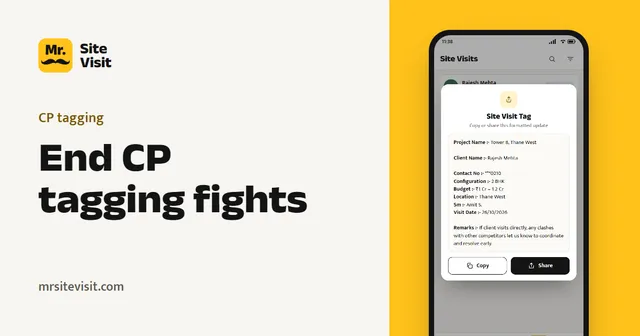
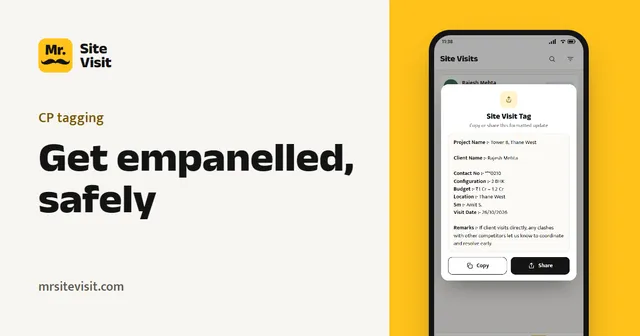
- Register the buyer with the developer’s CP desk, in their format, before the EOI form is signed
- Keep the acknowledgement, with its date and time, against the buyer’s name
- Write your firm’s name and code on the EOI form itself, where the desk asks for the partner
- Make sure the cheque or transfer goes to the developer’s account, never your firm’s
- Note the buyer’s budget, unit type and floor choices, with a second choice
- Note the refund terms you got in writing, and send them to the buyer
- Book a site visit, if the buyer hasn’t seen the sample flat or the site
Our registration format covers the fields a CP desk needs. Missing the tag is the most expensive mistake on this list. Once another firm claims the buyer, the EOI won’t settle it. Nor will it against the developer’s own team.
Launch day: who does what
Launch day goes to the firm that arrives organised. Give every person one job before you leave the office.
Take a 10-person firm with 25 EOIs for one tower, as an example. Change the numbers to fit yours:
- Owner at the CP desk Confirms every one of your buyers is on the developer’s list, in the right priority order.
- Team leader on the queue Tracks which of your buyers is next, and which units are still open.
- Each salesperson with their buyers Walks the buyer through first and second choices before their turn comes.
- One person on the phone Calls buyers who haven’t arrived, and moves late ones to the end of your list.
- Someone on records Notes each booking, unit and cheque, and each buyer who missed out, before you leave.
What happens when the first choice is gone? In my view, that’s when buyers walk. A salesperson with the second choice ready gives them a reason to stay. One who starts searching the price list gives them time to leave.
After launch: refunds and the buyers who missed out
Buyers who didn’t get a unit can be next month’s bookings. It depends on how you handle the refund.
List every buyer who didn’t book. Next to each, write the refund date the developer gave. Call each one before that date, and again on it. A refund that arrives on time builds trust. A late one is easier to explain if your firm called first.
Get one more thing in writing from the developer. If the buyer books in a later phase, or the launch moves, does your tag carry over, at the same brokerage (your commission)? Then ask the buyer what’s next. Some will wait for the developer’s next tower. Others want a similar project now. Either way, your notes from launch week already hold their budget and choices. You won’t need to ask again.
Which team are you?
The playbook is the same; the load is different. Find your row.
| If you’re… | Then focus on… |
|---|---|
| A CP firm of 3 to 6, with the owner selling | Fewer EOIs, all tagged; the owner holds the CP desk and the queue |
| A CP firm of 10 to 20, with a manager | Roles fixed a week ahead; one person on records the whole day |
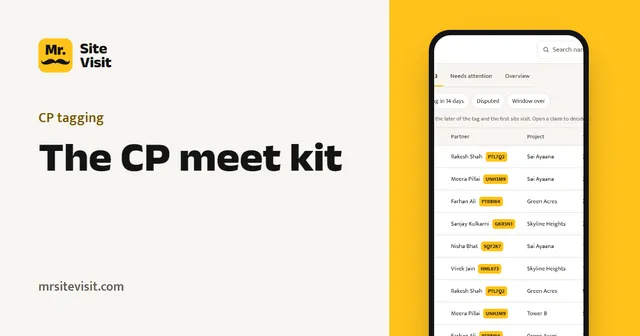
| A mandate company running the launch | One list of every CP firm’s buyers, in time order, visible to all firms |
| A team that’s never done a launch | Take 5 EOIs, not 50, and learn the developer’s process first |
“Everyone collects EOIs before registration”
That’s the common objection, and it’s sometimes true. If you don’t, the buyer may go to a firm that does.
But look at what you’d carry. The law says agents shall not help sell an unregistered project. Say the launch slips, or the terms change. Your firm’s name is on that cheque story. In my view, losing a few early buyers costs less than one dispute over a buyer’s money.
There’s a fair middle path. Keep a list of interested buyers, with no money taken. Call them the day the registration number appears. Even that may count as marketing, so ask the developer and your lawyer first. Our project launch plan covers the developer’s side of the same question.
Where software helps
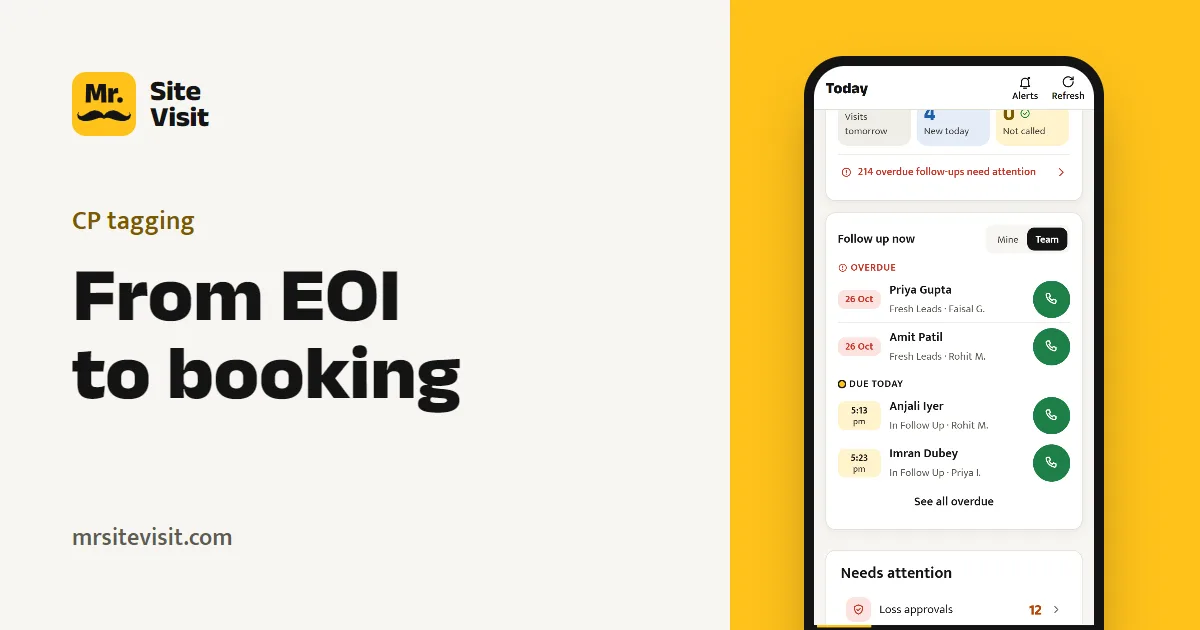
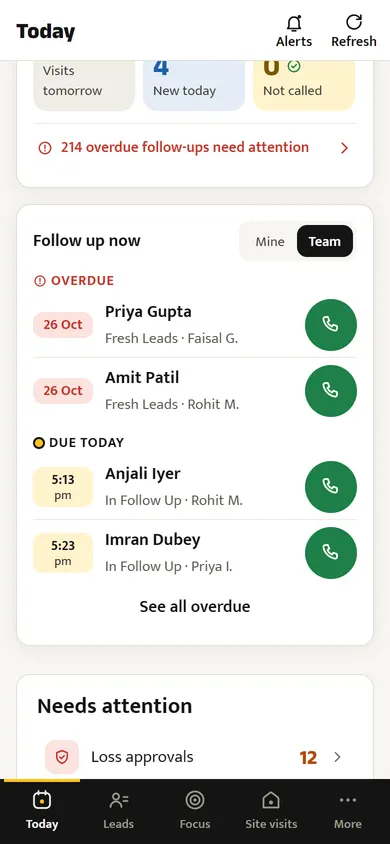
A CRM is the software your team logs leads, calls and visits in. It can’t change the developer’s refund terms. It keeps every buyer from your EOI list in one place, each with an owner and a reminder.
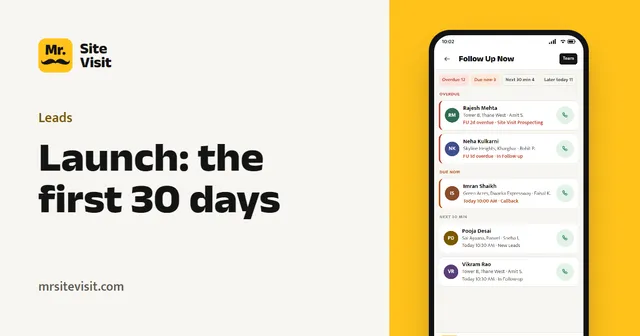
In Mr. Site Visit, each buyer is a lead with one owner. Their EOI date, refund terms and choices go in the notes. Set a follow-up reminder for each refund date and each buyer who missed out, and it shows up on that day. Site visits are recorded with the time and GPS location.
See how it fits CP firms or mandate companies (firms that run a developer’s sales on contract). Pricing starts from 3 users.
Start this week: print the checklist and give each person a launch-day role. Your buyers will notice the difference before the doors open.
Questions teams ask
What is an EOI in real estate?
An EOI, or expression of interest, is a buyer’s request for a place in the queue for a new launch, usually with a token cheque. It isn’t a booking or an allotment. The developer uses the EOIs to decide who chooses a unit first on launch day, and refunds the token if no unit is booked, on its written terms.
Is the EOI amount refundable?
Usually, but only on the developer’s written terms. Ask for the refund condition, the number of days and the payment method in writing before the buyer pays. If the developer won’t write it down, tell the buyer that plainly.
Can a channel partner collect EOIs before RERA registration?
The RERA Act says an agent shall not help sell a unit in a project that isn’t registered, and bars booking before registration. EOIs aren’t named in the Act, and one chartered accountant reads pre-registration EOIs as contrary to it. Ask your lawyer before taking any money.
How much is the EOI amount?
Each developer sets its own. The RERA Act caps any advance or application fee at 10% of the unit’s cost until a registered agreement for sale. An EOI token is usually far below that, but check the developer’s form.
Sources
- The Real Estate (Regulation and Development) Act, 2016, India Code (Section 3(1): no advertising, marketing, booking or sale before registration; Section 10(a): an agent shall not facilitate the sale of any plot, apartment or building in a project not registered with the authority; Section 13(1): no more than 10% of the cost as an advance or application fee before a registered agreement for sale)
- TaxGuru, CA Vinay Thyagaraj, Expression of Interest under RERA advertisement guidelines (25 August 2025): EoI isn’t named in the RERA Act; in the author’s view, taking EoIs before registration contradicts Section 3