DPDP Rules for real estate teams: what to change before 13 May 2027
By Jayesh G, Founder · 7 min read. Published 7 November 2026.
In short
- India’s DPDP Rules were notified on 13 November 2025. The main duties, including notice, consent, security safeguards and breach reporting, apply from 13 May 2027.
- A CP firm or developer sales team that keeps buyers’ numbers is covered. The risky places are WhatsApp groups, sheets on personal phones, shared logins and staff who leave.
- Collect only what you’ll use, tell the buyer why, limit who can see numbers, keep access logs, and know who reports a breach. Ask your lawyer to check the details.
On this page
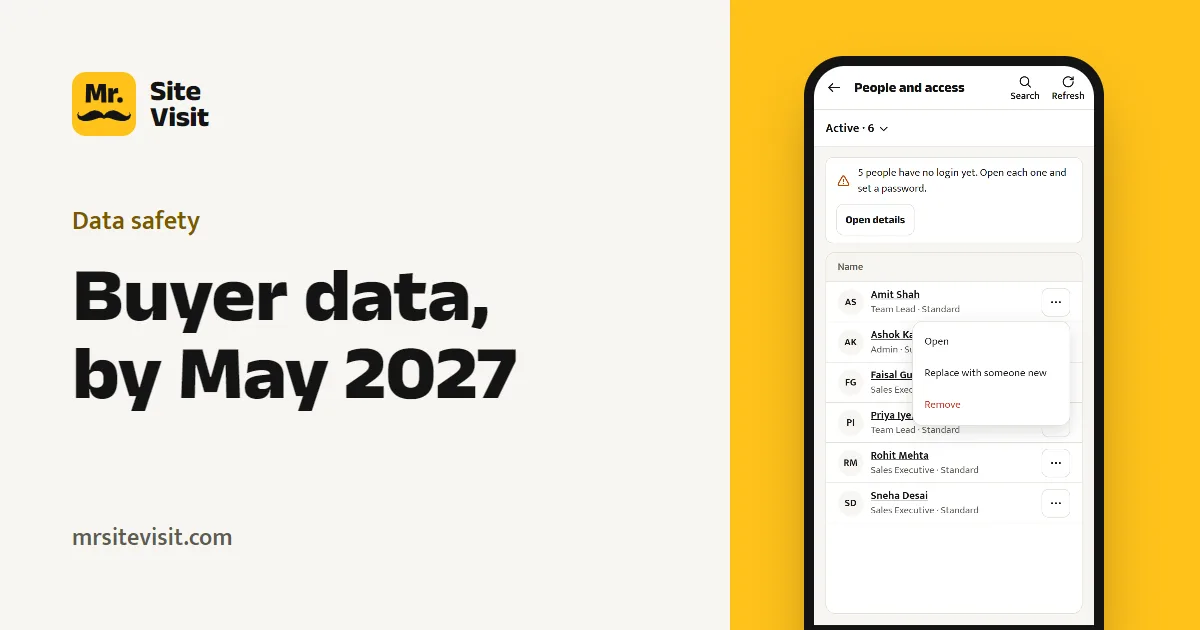
Where does your firm keep a buyer’s phone number today? And who could copy it today?
For most CP (channel partner) firms, the honest answer is uncomfortable. It’s a WhatsApp group, a few sheets and every salesperson’s phone. That worked when nobody asked. India’s DPDP Rules change the question, with a deadline next year.
From May next year, a team that keeps buyers’ data must tell them what it collects and why. It must protect that data, report breaches and answer requests. For your sales team, that means fewer copies of every number. Fewer people should see them, and you need a plan for leaks. Here’s what to change, in order. It’s a sales team’s reading of law-firm and news summaries of the Rules, not legal advice. Ask your lawyer to check it.
The simple rule Collect only what you’ll use, tell the buyer why, and let only the people who need a number see it.
The main duties start on 13 May 2027
The Rules arrived in stages. The one that matters most to a sales team is 13 May 2027.
| Date | What starts |
|---|---|
| 13 November 2025 | The Rules are notified; the opening rules start |
| 13 November 2026 | Rules for consent managers (firms that handle consent for people; as we read it, not a sales team’s job) |
| 13 May 2027 | The main duties: notice, consent, security safeguards, breach reporting, people’s rights |
Those dates come from SCC Online’s summary of the Rules. Law firm AZB & Partners gives the same date for notice and consent. The Rules gave businesses 18 months, and about six of them are left. That’s short once you count every phone your team uses.
Does it apply to your team?
Does your team keep buyers’ numbers in a phone, a sheet or a CRM (lead software)? Then assume it does.
- Data fiduciary
- The person or business that decides why and how personal data is used. A CP firm keeping its buyers’ numbers is one.
DPDP stands for the Digital Personal Data Protection Act, 2023, and its Rules. Our sources don’t name an exemption for small firms. Ask your lawyer if any applies to you. Until then, a 5-person CP firm should plan for it. So should a developer’s 50-person sales desk.
Where buyer data leaks in a sales team
Before you fix anything, find every place a buyer’s number lives. These are the usual ones:
- WhatsApp groups where leads are forwarded to the whole team
- Sheets on personal laptops and phones, often several old copies
- Shared logins to portals and to your lead software, used by many people
- Numbers sent to developers’ CP desks for registration
- Bought calling lists of people who never enquired with you
- Phones of salespeople who have left the firm
Think of the 9 pm forward: a new portal lead pasted into the team group, now on every phone in the firm. Or the salesperson who left on Friday, with Saturday’s site visit list still on their phone. Each is a copy you can’t protect or delete. The fewer copies you have, the less there is to go wrong.
What to change, step by step
Work through these in order, one a week. By January you’ll have months left to fix what you find.
- Map your data List every place from the checklist above that your team uses, and who can open each one.
- Tell buyers why Add a short notice to your forms and first message: what you collect, what for, and how to ask you to stop.
- Share less with developers A safe habit: send only what registration needs, and tell the buyer you’re registering them.
- Limit who sees numbers Salespeople can call without seeing full numbers. Remove shared logins.
- Keep logs and backups Record who opened or exported data. The Rules’ minimum safeguards include logging, and keeping logs for a year.
- Plan for a breach Name who tells the affected buyers, who tells the Data Protection Board (the body that handles these cases) at once, and who sends its detailed report within 72 hours.
- Name a contact person Publish the contact details of the person who answers data questions, and set up a way to answer complaints within 90 days.
- Delete what you don’t need Old lists, ex-staff sheets and forwarded groups go, once you’ve no reason to keep them.
Steps 5, 6 and 7 follow SCC Online’s summary, which isn’t the Rules’ own text. The rest are practical habits. Ask your lawyer to check them against the notified Rules before you write your own policy.
A notice your team can start from
The notice must be clear and stand on its own. Say what you collect and what for. Say how to withdraw consent or complain.
Timing matters. The notice should reach the buyer when you collect their details, on your form or with your first reply to a portal enquiry. What to do about numbers you already hold is a question for your lawyer. Meanwhile, stop forwarding old lists, and delete copies you don’t need (step 8). Use the same words on your form and your first message. If your form and your first WhatsApp reply say different things, which one did the buyer agree to?
Stop buying calling lists now
A bought list is a spreadsheet of people who never enquired with you. Calling them to sell a flat raises both consent and telecom questions.
Our post on buying real estate leads covers what TRAI, the telecom regulator, says about promotional calls. Want to be ready for May 2027? In my view, stop buying lists now. Spend that money on your own enquiries. Those buyers asked to hear from you.
Which team are you?
The work is the same; the size of it differs. Find your row.
| If you’re… | Then start with… |
|---|---|
| A CP firm of 3 to 6 | One master list, the WhatsApp groups closed, and the notice on your first message |
| A CP firm of 10 to 20 | No shared logins, numbers hidden from sales staff, and a last-day checklist for leavers |
| A developer’s sales desk | What CP firms send you: ask for less, and agree in writing how both sides protect it |
| A mandate company | The data you pass between the developer and CP firms: who gets what, and why |
Two more things to raise with your lawyer. If a vendor holds your data, like your CRM or a WhatsApp tool, your contract with them matters too. And who can wait? A firm of 3 can do steps 1, 2 and 4 now, and the rest by spring.
“Nobody will check a small firm”
Maybe not soon. But the Act’s penalty for weak security safeguards goes up to ₹250 crore. The Board decides each case. Nobody wants to be its first.
There’s also a business reason. Buyers complain, and in my view, developers will start asking their partners how they handle buyer data. A firm that can say “numbers are hidden, exports are logged, here’s our notice” sounds worth working with to a developer.
Can software do part of this?
A CRM is the software your team logs leads, calls and visits in. It won’t make your firm compliant by itself. Your notice, your process and your lawyer do that. It can make several steps easier.
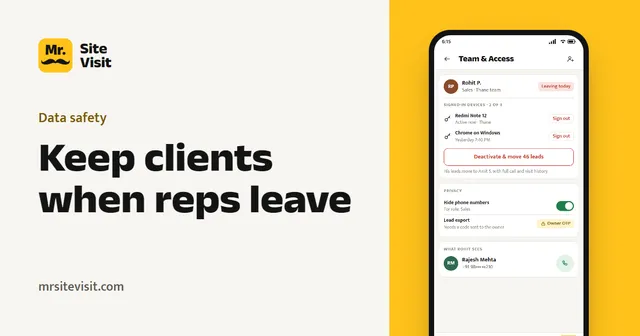
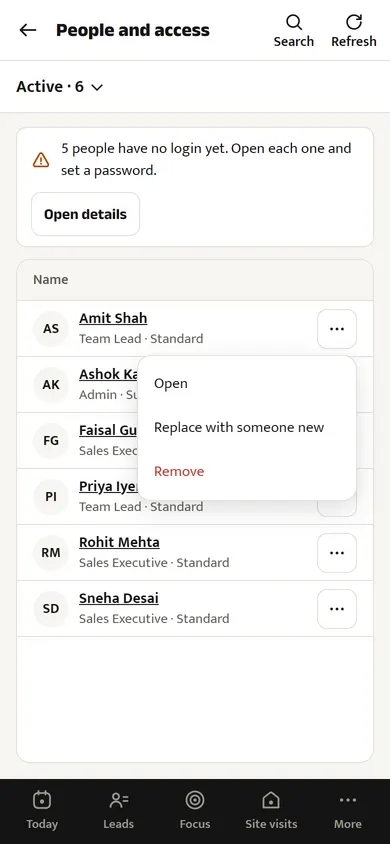
In Mr. Site Visit, full numbers can be hidden from sales staff. They can still call. Exports need a one-time code sent to the owner, and every export is logged. You can sign a person out of every device at once. Their leads move with every call, note and visit. Our security page explains each control.
See how it fits CP firms or developers, and pricing from 3 users. Our post on salespeople leaving with clients covers the last-day checklist.
Start this week with step 1 only. Sit with your team leader for an hour. List every place a buyer’s number lives, and count the copies.
Questions teams ask
When do the DPDP Rules apply to businesses?
The DPDP Rules were notified on 13 November 2025. The main duties for businesses, including notice, consent, security safeguards, breach reporting and answering people’s requests, apply from 13 May 2027. Rules on consent managers apply from 13 November 2026. Plan your changes before May 2027, not on the day.
Does the DPDP Act apply to real estate agents and CP firms?
It applies to anyone who decides why and how digital personal data is used, and a CP firm keeping buyers’ numbers in a phone, sheet or CRM does exactly that. Our sources don’t name an exemption for small firms. Ask your lawyer how it applies to yours.
What is the penalty under the DPDP Act?
The Act’s Schedule sets penalties of up to ₹250 crore for failing to take reasonable security safeguards, with other amounts for other breaches. The Data Protection Board decides the amount in each case.
Can a CP firm share buyer data with a developer?
Registering a buyer with a developer is sharing their data. A safe habit: tell the buyer it will happen and why, and share only what the registration needs. Ask your lawyer to check your notice and your agreements with developers.
Sources
- SCC Online, MeitY notifies the Digital Personal Data Protection Rules, 2025 (14 November 2025): Rules 1, 2 and 17–21 from 13 November 2025; Rule 4 (consent managers) from 13 November 2026; Rules 3, 5–16 and 22–23 from 13 May 2027; notices must be clear and set out the data, the purposes and how to withdraw consent or complain; minimum safeguards include encryption or masking, access controls, logging and monitoring, backups, and retaining logs for one year; a detailed breach report to the Board within 72 hours; grievances answered within 90 days
- AZB & Partners, India’s Digital Personal Data Protection framework comes into effect (19 November 2025): DPDP Rules notified 13 November 2025; notice and consent standards apply from 13 May 2027
- Digital Personal Data Protection Act, 2023 (Act No. 22 of 2023), India Code: duties of data fiduciaries; the Schedule sets penalties of up to ₹250 crore for failing to take reasonable security safeguards