Why your sales team stops updating the CRM within a month
By Jayesh G, Founder · 6 min read. Published 31 October 2026.
In short
- Teams stop updating a CRM when it feels like extra typing for the manager, not help for the salesperson.
- Fix three things in the first month: one place for new leads, less typing per call, and a daily list that's useful to the salesperson.
- Watch three numbers weekly: new leads logged on arrival, calls logged the same day, and overdue follow-ups.
On this page
In a 2014 study of more than 1,200 companies, 82.9% had a CRM. And for the first time, a smaller share of their salespeople used it every day. Sound like your team?
You’ve probably seen it happen. In week one, your team logs everything. By week three, your leads are back on WhatsApp. Calls aren’t logged. And your CRM shows a calm, empty day.
It isn’t laziness. In my view, a CRM stalls when it feels like typing for your report, not help for them. So fix three things in your first month. One place for new leads. Less typing per call. A morning list that’s useful to each person. Then watch three numbers every week.
The simple rule If the CRM doesn't save the salesperson time, they'll stop feeding it. Make it their list first, and your report second.
Why salespeople stop: it costs them, and pays you
Look at it from your salesperson’s side. Every lead typed in, every call noted, every date fixed is work. Who gets the benefit? You get a report. They get more typing.
CSO Insights wrote in 2009 that unless managers show salespeople the personal payback, many will leave the CRM unused or underused. In that research, 43% of firms said their CRM training needed improvement. It’s dated, but still the clearest research I found.
So ask yourself one question. What does your CRM do for them by Friday?
There can be a second reason too: a buyer kept on a salesperson’s own phone feels like job security. Our post on why salespeople hide leads from the CRM covers that fear, and the written promises that answer it.
Fix 1: one place for new leads
The fastest way to kill your CRM is to let leads arrive somewhere else. Do your portal leads still come by email? Do partners still send buyers on WhatsApp? Then someone has to copy them across. And copying is the first thing dropped on a busy Saturday.
- Connect every lead source you can, so leads arrive in the CRM by themselves
- Give every new lead one owner the moment it arrives
- Stop adding to the old sheet from one named switch day
- For leads that still arrive by hand, set one rule: in the CRM before the first call
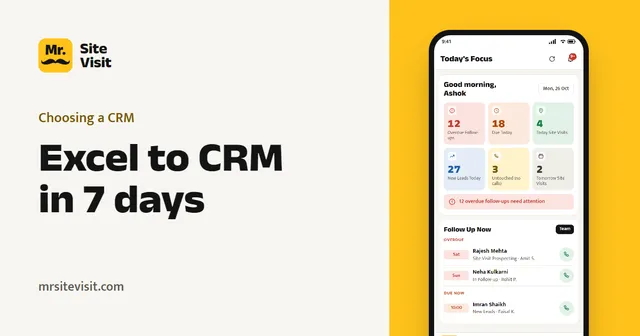
Moving from a sheet? Our seven-day Excel to CRM plan ends with that switch day.
Fix 2: less typing per call
Every field you add is one more thing your team skips on a busy day. So ask for less. Choosing a new CRM? Count the taps before you buy.
| Ask for | Skip, at least for now |
|---|---|
| Call result: spoke or not | Long call summaries |
| Next follow-up date | Ten-field qualification forms |
| One line of notes | Every detail of the conversation |
| Visit fixed and visit done | Fields only the manager reads |
Calls are where it hurts most, in my view. Can your CRM read calls from the phone? Then, on Android phones, nobody has to type “called, no answer” after every dial. That alone changes how the tool feels to your team.
Fix 3: make the morning list theirs
Your salespeople will open a tool that tells them who to call today. They’ll avoid one that only tells you what they didn’t do.
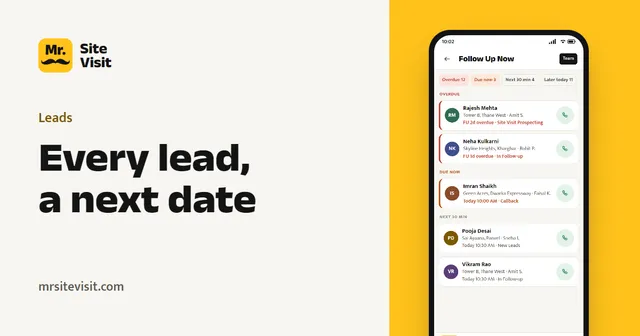
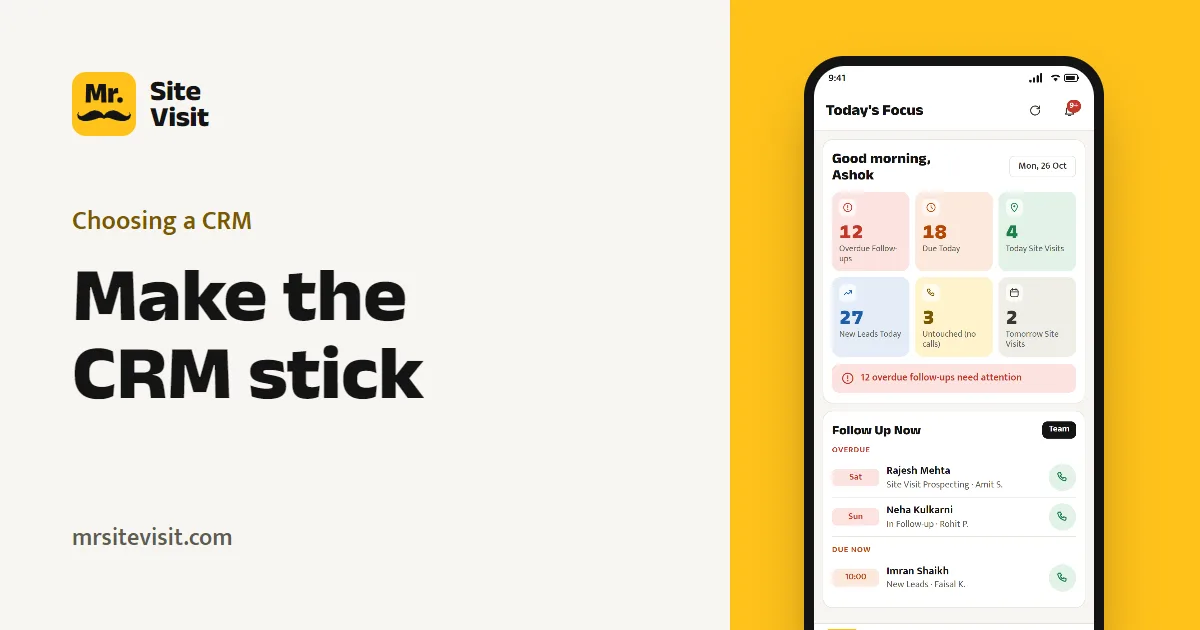
So in your first week, show each person their own list. Their overdue follow-ups, today’s reminders and the visits they’ve scheduled. Ask them to work from it for a week, not from memory. Our follow-up system explains the morning routine.
And trust matters. In its 2014 study, CSO Insights found that when salespeople trust the data in the system, they use it more. A list full of wrong numbers gets ignored fast. Clean your data before the switch.
Watch three numbers every week
You don’t need a big report to know if your CRM is sticking. Three numbers tell you:
- New leads logged on arrival Aim for every lead. If even one in ten is typed in later, find which source it came from. If not, a source is still bypassing the CRM.
- Calls logged the same day Low means typing is still too much work, or calls happen on another phone. On iPhones, calls aren't logged, so ask for the call result in one tap or one line.
- Overdue follow-ups Rising means the morning list isn't being worked.
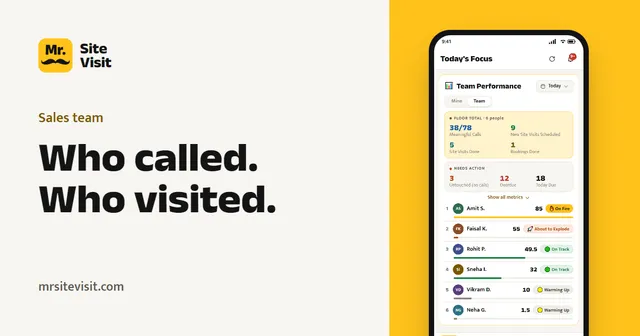
Look at them per person, not just for your team. One person slipping is a conversation. Everyone slipping is your setup. Our post on tracking a sales team has more on reading these.
Which team are you?
The fixes are the same. Who owns them changes with your size:
| If you are… | Then… |
|---|---|
| 3 to 6 people, the owner still sells | The owner works from the CRM first. If you don't, nobody will. |
| 10 to 20 people with team leaders | Each team leader checks the three numbers for their team every Monday |
| A developer's sales team | Make the daily review run from the CRM screen, not from a separate report |
| A mandate company working with outside partners | Ask for every partner lead to be entered before the first call, so you can see who brought each visit |
Two pulls come with a quiet CRM. One says switch to another tool, because this one isn’t working. The other says give up, because the team won’t use any app. My rule: don’t switch or quit for two weeks. Fix the three things with one team, watch the three numbers, then decide.
Who shouldn’t buy a CRM yet? A team where the owner handles every lead and nothing slips. A sheet will do until it doesn’t.
“My people aren’t tech people”
Many of your best salespeople aren’t. They’re good with people, and that’s why they sell.
But they all use WhatsApp, and they all use their phone’s call history. A CRM that works on the same phone and asks for one line and a date isn’t a tech problem. My honest view: when a team won’t use a tool, the tool is usually asking for too much.
One rule helps more than training: a lead that isn’t in the CRM doesn’t count for incentives. It’s clear, and it’s fair to everyone.
Where Mr. Site Visit fits
We built Mr. Site Visit for real estate sales teams of three or more, around these three fixes.
Leads from 99acres, MagicBricks, Housing.com, Meta forms and your website arrive with their source and one owner. Nobody copies them across. On Android, calls are matched from the phone’s call log and marked Verified, so nobody has to type that a call happened. iPhone calls aren’t logged. Follow-ups come as reminders, with an 8:30 am push and overdue ones in red. They’re reminders; nothing forces the call.
Starter is ₹423 and Growth ₹548 a user a month, billed yearly, from three users, with no GST on top. See the plans and prices.
This Monday, check the three numbers for last week with your team. Then ask each person one question: what’s the one thing in the CRM that slows you down?
Questions teams ask
Why do real estate sales teams stop using the CRM?
Usually because it feels like extra typing for the manager, not help for the salesperson. Leads still arrive on WhatsApp or email, calls have to be typed in by hand, and the daily list isn’t useful. Fix those three things in the first month, and the habit has a fair chance of holding.
How do I get my sales team to use a CRM?
Make it the only place new leads arrive, cut the typing per call, and make the salesperson’s morning list come from it. Then check three numbers every week: leads logged on arrival, calls logged the same day, and overdue follow-ups. Talk to the person behind any number that slips.
Should I punish salespeople who don’t update the CRM?
Start with the reason, not the penalty. Ask what makes it hard: the phone, the typing, the time. One rule I’d suggest instead: a lead that isn’t in the CRM doesn’t count for incentives. That rule is clear, and fair to everyone.
How long does it take for a team to get used to a new CRM?
The first month decides it. If new leads, calls and follow-ups are all in the CRM by week four, the habit usually holds. If the team is still using WhatsApp or a sheet alongside it, fix that before anything else.
Sources
- Jim Dickie (CSO Insights), The Adoption Rate Challenge, destinationCRM, 1 March 2014: 82.9% of 1,200+ firms used CRM, but the share of salespeople actively using it daily fell for the first time in 12 years; adoption rises when salespeople trust the data
- Jim Dickie (CSO Insights), Don’t Confuse Implementation with Adoption, destinationCRM, 1 May 2009: 43% of firms said CRM training needed improvement; salespeople must see their personal payback