How to distribute fresh leads fairly in a real estate sales team
By Jayesh G, Founder · 6 min read. Published 31 October 2026.
In short
- Pick one rule and write it down: turn by turn (round robin), by project, by source or by area. Many teams mix two.
- Fair isn't equal. Cap each person at what they can call within the hour, and skip people who are on site or on leave.
- Every lead needs one owner the moment it arrives, and a rule for what happens if that owner doesn't call in time.
On this page
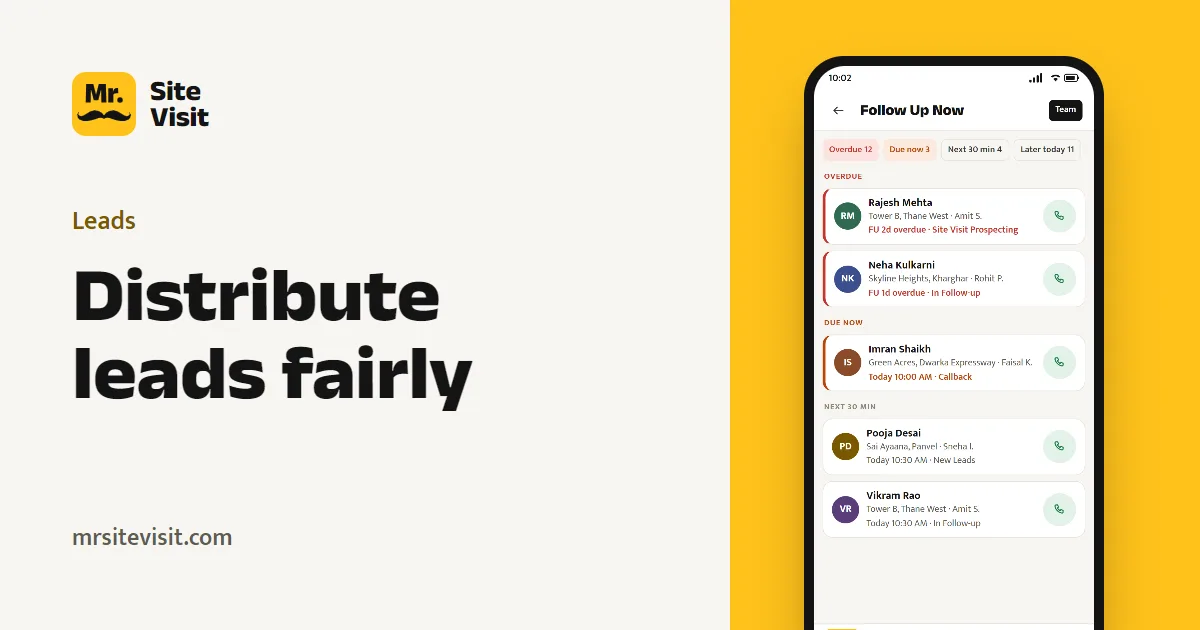
Who decides which salesperson gets the next lead in your team? Is it whoever sees it first on WhatsApp? Then some of your best leads get fought over. And some aren’t called at all.
Every lead you pay for should be called fast, and your team should feel the split is fair. Miss the first, and you’re paying for leads nobody calls. Miss the second, and the fights start.
So write down one rule. Turn by turn, by project, by source or by area: many teams mix two. Give every lead one owner the moment it arrives. Cap each person at what they can call within the hour. And move a lead on if its owner doesn’t call in time.
The simple rule One owner per lead from the moment it arrives. Not called in time? It goes to the next person.
Four rules decide who gets the lead
There’s no single right way. Yours depends on how your team sells:
| Rule | How it works | Suits a team where… |
|---|---|---|
| Turn by turn (each person in order) | Each new lead goes to the next person in a fixed order | Everyone sells the same projects |
| By project | Each project has its own people | People specialise in projects |
| By source | Portal leads to some, partner leads to others | Sources need different handling |
| By area | Each locality has its own people | The team covers different micro-locations |
Many teams mix two: by project first, then turn by turn within the project’s people. Whatever you pick, write it on one page. Share it with your team. An unwritten rule gets argued about every week.
Fair isn’t equal
Giving everyone the same number of leads sounds fair. It isn’t. On a busy Saturday, one of your people may be on site with four families while another sits at the desk.
- Skip people who are on site, on leave or off duty, until they're back
- Cap each person at the new leads they can call within the hour
- Don't give new leads to someone with a long list of overdue follow-ups
- Keep a weekend and evening duty roster, so leads have an owner then too
- If the same buyer enquires again on another portal, give the lead back to the first owner
How many leads can one person handle? It depends on what they already hold, and how many visits they host. An example only: if someone can call six new leads in an hour, give them at most six, and send the next to the next person. Our post on leads per salesperson shows how to set the cap.
The hour is the real test of any split
Your split is only good if leads get called fast.
A 2011 Harvard study, as SmartCompany reported, looked at 1.25 million web leads at 42 US companies. Leads contacted within an hour were nearly seven times as likely to qualify (turn out to be a real buyer) as those contacted an hour later. It’s old and American. But the lesson holds on your floor too: the split that gets leads called first wins.
So add a move-on rule. Here’s how it runs:
Our post on calling every portal lead within an hour explains the hour rule in detail.
What about giving more to your best closer?
It’s tempting. Your best closer books more, so why not give them more?
Because a busy star calls leads late. The leads they can’t reach in time cool off. And your newer people never get enough to learn. Here’s how I’d handle it:
| If… | Then… |
|---|---|
| Your best closer still calls every lead within the hour | Give them a few more, on top of everyone's fair base |
| They're calling late or holding overdue follow-ups | Keep them at the base, and give them the revisits to close |
| A new person's leads rarely become visits | Don't cut their leads; pair them with the closer for a week |
Which team are you?
The rules change with your size and how you sell:
| If you are… | Then… |
|---|---|
| 3 to 6 people selling the same projects | Turn by turn, with a weekend duty person and a move-on rule |
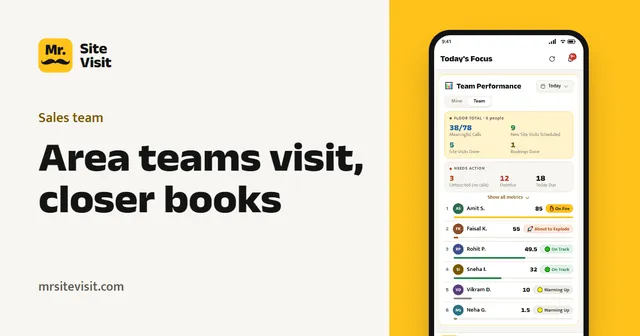
| 7 to 20 people in area teams | By area first, then turn by turn inside each area team |
| A developer with several projects | By project, with one person making the first call for each project |
| A mandate company with outside partners | Partner-brought buyers stay with the partner's contact; direct leads go by project |
For partner-brought buyers, write the buyer’s name against the partner on the day they’re registered. Fights about who brought a buyer often start when the rule gets written after the dispute. Our post on team structure covers area teams in more detail.
“My team will fight over leads whatever I do”
Some will. Fights usually come from a rule nobody wrote down. Or one applied differently each time.
Worried your team won’t follow a new system? Start with the one-page rule, pinned in your team’s WhatsApp group. You don’t need to switch anything first. So write your rule and share it. Apply it the same way every time, including to your favourite salesperson. When someone complains, show them the rule and the move-on time. My honest view: people accept a strict rule far more easily than a kind but random one.
Where Mr. Site Visit fits
You can run all of this on one page and a WhatsApp group today. If you’re three people who sit together, you may not need software for it yet. It starts to matter when leads come from several portals and you can’t see who called what.
We built Mr. Site Visit for real estate sales teams of three or more. Turn by turn isn’t something we automate, so keep that part on your one-page rule.
Leads from 99acres, MagicBricks, Housing.com, Meta forms and your website are assigned the moment they arrive. You set the rules: by project, source or area. Each project can have its own team and rules.
What if nobody calls? Then the lead moves to the next person: two hours by default, and you can change it. On Android, calls are matched from the phone’s call log. So the call log shows whether the lead was called. iPhone calls aren’t logged.
Starter is ₹423 and Growth ₹548 a user a month, billed yearly, from three users, with no GST on top. See the plans and prices.
This week, write your lead rule on one page with your team leaders. Then pin it in the team’s WhatsApp group.
Questions teams ask
How should a real estate team distribute leads?
Write down one rule: turn by turn (round robin) when everyone sells the same projects, by project when people specialise, by area when the team covers different localities. Give every lead one owner the moment it arrives, cap each person at what they can call within the hour, and move a lead to the next person if it isn’t called in time.
Is round robin fair for real estate leads?
It’s fair when everyone sells the same projects and is available. It stops being fair when one person is on site all day, on leave, or already holds more open leads than they can call. Skip them in the turn until they’re free.
Should the best salesperson get more leads?
Give them more only after everyone gets a fair base, and only if they still call every lead within the hour. More leads to a busy star often means more leads called late.
What happens if a salesperson doesn’t call a lead in time?
Set a time, often one or two hours, after which the lead moves to the next person. Write the rule down and apply it the same way every time, so nobody takes it personally.
Sources
- SmartCompany, Are you letting online leads go cold? (1 July 2011): 1.25 million leads at 42 US companies; leads contacted within an hour nearly seven times as likely to qualify as those contacted an hour later
- Oldroyd, McElheran and Elkington, The Short Life of Online Sales Leads, Harvard Business Review, March 2011 (the study's page; paywalled, figures as reported by SmartCompany)